Integration Platform Build
Designed and implemented a Celigo-based integration layer connecting e-commerce, inventory, and finance systems.
Industry
E-commerce / Retail
Role
Integration Lead
Timeline
6 months
Results
Context
The problem
The business ran on five disconnected systems: Shopify for orders, a legacy inventory system, NetSuite for finance, a warehouse management system, and various spreadsheets filling the gaps. Every order required manual data entry across multiple platforms. The finance team spent the first week of every month reconciling discrepancies between systems. Product data lived in multiple places, often with conflicting information.
Constraints
What we were working with
- Cannot disrupt existing operations during peak trading periods
- Legacy inventory system has no modern API—only CSV exports
- Finance team needs audit trail for every data change
- Budget constraints rule out replacing the legacy systems entirely
- Team has limited technical capacity for ongoing maintenance
Approach
How I tackled it
- 01Mapped all data flows between systems to understand the full picture
- 02Identified the source of truth for each data type (products, orders, inventory, customers)
- 03Designed idempotent integration flows that can safely retry on failure
- 04Built a validation layer to catch data quality issues before they propagate
- 05Implemented comprehensive error handling with automatic alerts
- 06Created reconciliation reports that run daily and flag discrepancies
Architecture
Technical design
Celigo iPaaS serves as the integration hub, with custom Node.js functions handling transformation logic. Each system connects via the best available method—API where possible, scheduled file transfers for legacy systems.
- Shopify webhooks trigger real-time order flow to NetSuite
- Inventory syncs bi-directionally every 15 minutes
- Product data flows from NetSuite (master) to all satellite systems
- Custom validation functions catch and quarantine bad data
- Dead letter queue captures failed transactions for manual review
Technical Artifact
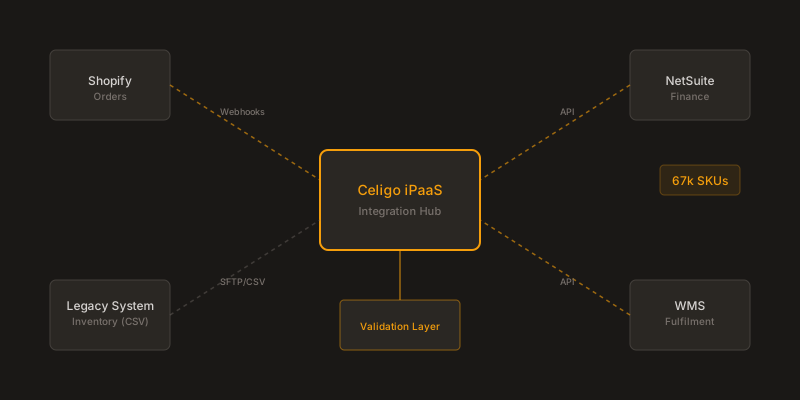
The integration hub connects five systems through a mix of real-time webhooks, scheduled syncs, and file-based transfers for legacy compatibility.
What you're looking at:
- Celigo iPaaS as central hub handling all transformations
- Real-time webhooks from Shopify, scheduled polling for legacy
- Validation layer catches data quality issues before propagation
- 67k SKUs flowing through daily with 99.9% success rate
Delivery
What I shipped
Core order-to-cash flow: automated order creation in NetSuite, inventory reservation, fulfilment tracking
Product information management: single source of truth with automated propagation to all channels
Inventory synchronisation: real-time stock levels across warehouse and sales channels
Financial reconciliation: automated matching of orders, payments, and fulfilments
Monitoring dashboard: real-time visibility into integration health and transaction volumes
Outcome
The result
The finance team now closes monthly books in one day instead of one week. Customer service can see real-time inventory across all channels. The product team updates data in one place and it flows everywhere. Most importantly, the business has the foundation to scale without proportionally scaling manual effort.
Lessons
What I learned
- 1
Start with the reconciliation problem—if you can't verify data is correct, everything else is built on sand
- 2
Legacy systems are rarely as limited as they first appear; the CSV export became a reliable integration path
- 3
Error handling isn't optional—it's the difference between a system that works and one you can trust
- 4
Documentation matters more than you think; the team needed to understand the flows to maintain them
Facing a similar challenge?
I'd be happy to discuss your situation and explore whether I can help.